70+ Best Ice Breakers to Boost Event Networking
Ice breaker games add value to attendees at in-person events because they promote networking. We’ve compiled the best icebreaker games for your next event.
.webp)
People open up more when they’re relaxed and having fun.
That’s why ice breaker games add value for event attendees at in-person events because they promote networking. They’re games that encourage attendees to get to know each other and energize groups of every size. If you're tired of the same old small talk at the beginning of every meeting, we’ve compiled the 75 best networking ideas to have your attendees try at your next event.
What is an Ice Breaker Game?
Icebreaker games are commonly used in B2B event planning and team-building activities, conferences, workshops, and social gatherings. They provide a structured way for people to interact with others and break social barriers. These business ice breaking activities also build bonds and elevate the event experience for attendees.
In large group settings like conferences, corporate event ice breakers provide an opportunity for everyone to participate. They also provide an element of fun which lets event attendees let their guard down and become more willing to share details about their work and personal life.
As the events industry sees significant growth, with forecasts predicting an increase in both small and large meeting sizes through 2024, the continuing need for effective networking strategies at events becomes more apparent.
Ice breaker games are especially effective for networking if those grouped together already have common interests. Connect Space’s innovative matchmaking algorithm, an example of B2B networking apps, efficiently connects event attendees at in-person events.
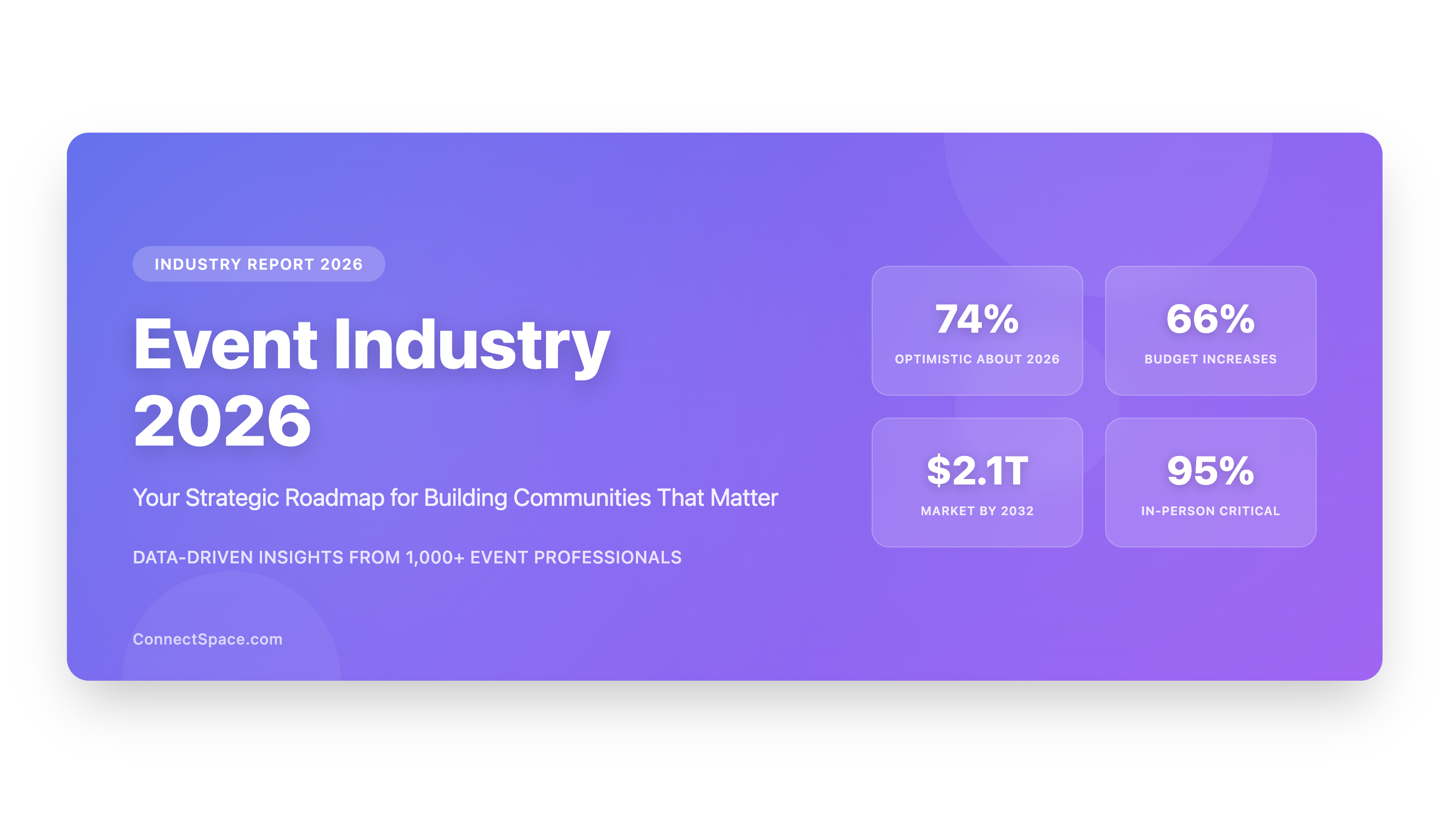
The effectiveness of face-to-face networking is underscored by the fact that a substantial 95% of professionals believe that in-person meetings are crucial for developing stronger business relationships. Additionally, the economic impact of these interactions is significant, with every dollar spent on business travel for networking returning approximately $12.50, highlighting the high value of personal interactions.
Top 10 Ice Breaker Games for Networking Events
1. Would you rather...
The leader tosses a ball to one member and asks a question; would you rather live twice as long or win a lottery? Would you rather be an astronaut or a zoo keeper? Would you rather lose your hearing or vision? After answering the question, you hand over the ball to the next attendee.
2. Two truths and a lie
A member will state three things: two truths and one lie. The rest of the group should guess which is which.
3. People Bingo
Create a bingo card with a grid. Write a question on each square that pertains to some members. The other attendees mingle and sign their cards indicating what applies to other participants. The winners are those who get a Bingo.
4. Song scramble
This game introduces lyrics of well-known songs. The attendees should write down the lyrics. The team to line up the lyrical order wins.
5. Who I'm I?
The participants will have a name of a real or fictional character on their back. They will walk around giving the answers to the names as they ask the rest of the team "yes" or "no".
6. Unique and shared
The team leader will ask attendees to create groups of five. They should discover their unique and interesting characteristics. As they become aware of their traits, they feel more empowered to work together.
7. Alphabet brainstorm
Pick a random alphabet and ask members to come up with a noun.
8. Share the love
The participants should say something respectful to each other.
9. What do we have in common?
The members share something they love like hobbies, music, food, etc. The goal is to get everyone thinking.
10. Name that tune
The teammates play a popular song, and the rest can guess the name.
Quick Ice Breaker Games
11. Guess the childhood photo
The leader shows a childhood photo of one of the members. Everyone should guess that person.
12. Birth map
One attendee is selected and the rest should guess his or her birthplace.
13. The handshake
A handshake will make the participants ease up. Some will show a super cool handshake.
14. The toilet paper game
The TP game involves passing a roll of toilet paper to the participants. They should cut the squares and highlight a fact about themselves.
15. Lineups
Form a group of 10 people - each with funny names like the "noisemaker" or "whistle". The group leader will ask the rest to line up alphabetically or from youngest to oldest. The first group to complete the task wins.
16. Random talent show
This works well on an individual basis. The leader selects random people to showcase their talents. Those with many unique talents carry the day.
17. Birthday lineup
The attendees have five minutes to figure out their birthdays in silence. They cannot write them down - they just organize themselves through a fast game of charades.
18. Paint a picture and build a story
The members show some hilarious artwork.
19. Bad joke contest
Everyone should recite their corniest joke.
20. Tall tales
Everyone will make a story using three sentences. The third one should contain the plot.
21. Say your name backwards
The players write their names on a paper and place them in a bowl. One should pick any paper and read it out aloud - backward.
22. Jenga
The members are divided into small groups. Next, the team will pick some woodblocks and build a tower. Everyone will laugh when it comes toppling down.
23. Quick portrait gallery
Everyone is given the name of the person to draw in minutes.
24. Beach ball toss
The participants form a circle and toss a ball to each other. The person who catches performs the task from the person who threw it.
Fact-Finding Ice Breaker Games
25. Show and tell
Each member will say the topic or an object they are interested in. This will make the exhibitionist characters in the group hone their presentation skills.
26. One word at a time
Create a surprise sentence from a general topic. The first attendee in the group should say the first word and the next person continues. The outcome is always funny.
27. Stress balls
The participants stand in a circle and pass the ball around. This game can get complicated after changing different variables like quantity and speed. Stress balls highlight how the team should communicate to achieve greater results.
28. Name game
The members sit in a circle. The first person says their name; the second says their name plus the first person's name, etc. This continues to all other attendees without forgetting the names of others. If anyone is lost, encourage the rest to help.
29. Have you ever game
The facilitator reads out the statements and asks the members to stand. Possible topics include places they have ever visited, movies they have seen, sports they've ever played, etc.
30. The four quadrants activity
Take sheets of paper and a marker. Ask the participants to draw a 2 x 2 grid. Next, the four questions are placed on each quadrant. Afterward, the attendees should present their drawings and discuss them.
31. Back to back drawing
Two members sit facing away from each other. One person will receive an object and describe it without giving the name. The other person should draw the image. This game improves communication between the team members.
32. Human Knot
Ask the members to stand in a circle and close their eyes. Next, they should hold their hands with someone across the circle. Then, ask them to open their eyes to untangle the knot without breaking the chain.
33. The shoe game
Ask everyone to remove a shoe to form a pile. Then, everyone should pick one and find a match (not their own).
34. Snowball fight
Divide the group to form two lines. Give everyone a piece of paper and ask them to write something. Each person should throw the paper to the person on the opposite side. The goal is to read and answer the question.
35. Who I'm I?
Participants wear sticky notes of their favorite characters. The rest should figure out who that is.
36. Red Light, Green Light
A line is drawn to separate two groups. One is named red, and the other green. One person must make quick movements when instructed to move to the "red" or "green" side.
37. Most likely to...
Participants should give reasons why someone deserves the title.
Ice Breaker Games that Require Collaboration
38. Egg drop
Supply fresh eggs and materials to protect them. Each group should support the egg from free falling (from a predetermined height). This activity fosters communication and collaboration.
39. Blind Square
Take a long rope with the ends tied together. Blindfold four participants and ask them to form a perfect square without looking.
40. Rock, Paper, Scissors
Introduce the traditional rock, paper, and scissors but with some twist. The winners advance to the next stage, while the losers become the fans. Keep it simple to ensure all attendees participate.
41. The No Smiling game
Everyone should keep a straight face and not smile for the first five minutes. Some become giggly and can't hold their laughter anymore.
42. Build something together
Provide a tape and dry spaghetti and ask the members to build a structure. A Mashmarrow should sit on top without toppling over.
43. Solve a riddle
Divide the participants into small groups and present a riddle (not easy to guess). Ask the members to solve it together. - make sure the members are not besties.
44. Collaborative Craft Game
A creative team-building activity where participants work together on a shared craft project.
45. Dancing Contest
A lively and fun competition where individuals or teams show off their dance moves.
46. Find Your Match
Participants find another person based on matching or complementary characteristics or items.
47. Hand-Holding Circle
A group activity focused on building trust and teamwork through physical connection.
48. Hula Hoop Island Game
A team game where groups must work together to stay within a shrinking space marked by a hula hoop.
49. Marshmallow Catapult Challenge
Teams build catapults to launch marshmallows, focusing on teamwork and problem-solving.
50. Musical Chairs
A classic game where players circle chairs and sit when the music stops, with one less chair than players.
51. Quick-Fire Questions Game
A fast-paced game where participants answer spontaneous questions to encourage openness.
52. Switch Sides If…
A movement-based game where players switch sides of a room based on shared experiences or opinions.
53. Personality Quiz
An activity where participants take a quiz to reveal aspects of their personality, fostering self-awareness and discussion.
54. Fun Questions Game
A casual game where participants answer light-hearted questions to break the ice.
Who is it?
A guessing game where players try to identify a person based on clues or descriptions.
55. Scavenger Hunt
Teams or individuals search for specific items or complete tasks in a set area within a time limit.
56. This is Better Than That Game
A decision-making game where teams choose the best item from a selection for a hypothetical scenario.
57. Choose Your Favorite
Participants select and discuss their favorite items, activities, or concepts.
58. Food You'd Rather…
A game where players choose between different food options, often leading to humorous or insightful discussions.
59. Travel You'd Rather
Participants decide between various travel scenarios, revealing preferences and experiences.
60. A Fun Fact Others Don't Know
Everyone shares an unknown or unusual fact about themselves.
61. Share Your Favorite Way to Unwind
Individuals discuss their favorite relaxation and leisure activities.
62. What Chore Do You Dread Doing?
A conversation starter where participants share the household task they least enjoy.
63. Which is One Place You'd Like to Travel and Why
Individuals share their dream travel destinations and reasons for their choices.
64. Paper Airplanes
Participants create and fly paper airplanes, often incorporating elements of creativity and competition.
65. 5-Minute Handshakes
A networking activity where participants spend a short time getting to know each other through handshakes.
66. Doodle Duel Derby
A drawing competition where participants create doodles based on prompts or themes.
67. Invisible Object - Show and Tell
Participants describe an invisible object, using imagination and descriptive skills.
68. Tic Tac Toe
A simple and classic game where players aim to get three of their marks in a row on a grid.
69. Drawing Personality Shapes
An activity where participants draw shapes that represent aspects of their personality.
70. Wolf/Chicken/Grain Riddle
A puzzle where players figure out how to transport items across a river without leaving them unattended.
71. Playing Card Meet-Up
A networking game where participants find others based on matching or complementary playing cards.
72. Charades
A classic game where players guess a word or phrase from another player's pantomimes.
The Bottom Line
Ice breaker games are a great way to network at in-person events. Your attendees will make friends and the event will be more memorable. Attendees will also be more likely to attend your next event if they have a fun experience.
Book a demo with Connect Space to find out how to promote attendee networking with our matchmaking app.
FAQs:
What are the best ice breakers for large B2B events?
For large B2B events, effective ice breakers include "Two Truths and a Lie", "Speed Networking", and "Business Card Bingo". These games help attendees from different industries interact, making networking more engaging. Adding activities where attendees share business experiences can create stronger connections, increasing engagement at networked events. If organizers need more ideas for their networking event, they can consider adding additional interactive elements to boost more engagement.
How do you introduce an ice breaker session?
Begin an ice breaker session by clearly stating its purpose—to foster connectivity and ease the networking process. Introduce the game rules succinctly and encourage enthusiasm with a warm, inviting tone. Highlighting the benefits of participation, such as building potential business relationships, can increase engagement.
Can ice breakers really improve business networking?
Yes, ice breakers can significantly enhance business networking by reducing social barriers and encouraging open communication. Structured ice breaking sessions increase the likelihood of meaningful business connections, facilitating easier exchange of ideas and collaboration among professionals from varied backgrounds.
How often should you change ice breakers at recurring events?
For recurring events, it's recommended to vary ice breakers to maintain attendee interest and adapt to feedback. Changing games every two to three events can refresh the experience and sustain engagement.

%20(1).webp)

More than an ice breaker
Matchmaking, meeting scheduling, and a live activity feed keep people connected all event long. See it on a demo.
Book Demo →